How to Prepare Your Electrical System for Winter Storms
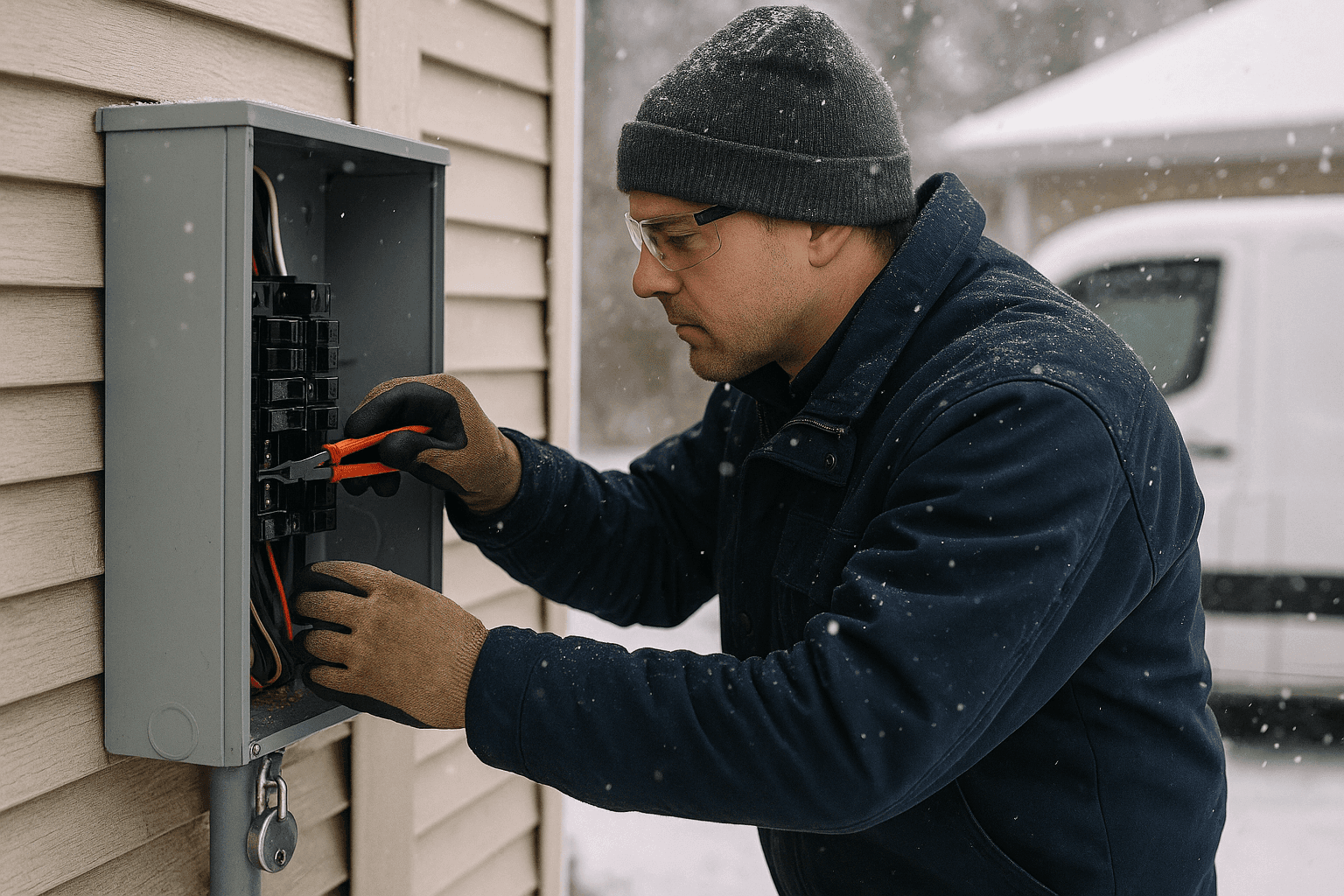
Winter storms can turn a peaceful evening into chaos. The lights flicker, the heater stutters, and suddenly, you’re left in the dark—literally and figuratively. At Electric Saints, we know how quickly a winter storm can put your home or business at risk.
Electrical problems don’t wait for a convenient time. That’s why being prepared—before the snow falls or the ice forms—is the smartest move you can make. Let’s walk through what you need to know to keep your electrical system safe, steady, and storm-ready.
Why Winter Storms Threaten Electrical Systems ❄️
Winter storms are like uninvited guests that bring a bag full of trouble. Ice and snow can weigh down power lines, snap branches, and block vents. Freezing rain seeps into outdoor outlets and panels, while wind-driven debris can damage exposed wiring.
But it’s not just the obvious stuff. Winter also increases the risk of electrical fires and power surges. When everyone cranks up the heat and plugs in extra appliances, your system feels the strain. Sudden outages can cause surges that fry sensitive electronics or even start fires.
Common winter electrical hazards:
- Downed power lines from ice or falling trees
- Water intrusion into panels, outlets, or switches
- Overloaded circuits from space heaters or holiday lights
- Power surges during outages and restoration
- Blocked exhaust vents for generators or appliances
According to the National Fire Protection Association (NFPA), electrical failures are a leading cause of winter house fires. The U.S. Department of Energy also warns that improper generator use and overloaded circuits can be deadly.
Essential Winter Electrical Safety Checks
Before the first snowflake falls, give your electrical system a checkup. Think of it as putting on a warm coat before heading outside. Here’s what to focus on:
- Panels & Breakers: Make sure your main panel is dry, accessible, and labeled. Look for rust, corrosion, or scorch marks.
- Wiring & Circuits: Inspect visible wiring for cracks or wear. Listen for buzzing or sizzling—never a good sign.
- Outlets & Switches: Test for loose or warm outlets. GFCI outlets should trip and reset easily.
- Surge Protection Devices: Check that whole-house surge protectors are in place and indicator lights are green.
- Smoke & Carbon Monoxide Detectors: Replace batteries and test alarms. Winter means closed windows, so detection is critical.
- Outdoor Connections: Cover outdoor outlets with weatherproof covers. Clear snow and ice away from exterior panels.
If you’re not sure what to look for, don’t guess. A professional electrical safety inspection can catch hidden hazards before they become emergencies.
Preparing Backup Generators for Winter Use
When the power goes out, a backup generator is your lifeboat. But a lifeboat with a hole won’t keep you safe. Here’s how to make sure your generator is storm-ready:
Generator Maintenance Tips
- Run a Test: Start your generator monthly, even if you don’t need it. Listen for odd noises or rough running.
- Fuel Check: Keep fresh fuel on hand. Old gasoline can gum up the engine.
- Oil & Filters: Change oil and replace filters as recommended by the manufacturer.
- Extension Cords: Use heavy-duty, outdoor-rated cords. Never run cords through windows or doors where they can get pinched.
- Exhaust Venting: Place your generator outside, away from doors and windows. Carbon monoxide is invisible—and deadly.
- Transfer Switch: If you have a transfer switch, test it. This device safely connects your generator to your home or business panel.
The Electrical Safety Foundation International (ESFI) stresses the importance of following all manufacturer instructions and never operating a portable generator indoors.
Emergency Preparedness Tips
Storms don’t send invitations. Be ready before the sky turns gray.
Before the Storm
- Charge Devices: Phones, flashlights, and battery packs.
- Unplug Sensitive Electronics: Prevent surge damage.
- Check Emergency Supplies: Flashlights, batteries, blankets, and a battery-powered radio.
- Know Your Panel: Label breakers and know how to shut off power if needed.
During the Storm
- Stay Indoors: Avoid downed lines or flooded areas.
- Use Generators Safely: Only outdoors, never in garages or basements.
- Monitor for Hazards: Smell smoke? Hear buzzing? Call an emergency electrician immediately.
After the Storm
- Inspect for Damage: Look for water leaks, exposed wires, or tripped breakers.
- Reset Carefully: Only reset breakers if you’re sure it’s safe.
- Call for Help: If anything seems off, don’t take chances.
The Importance of Professional Electrical Safety Inspections
You wouldn’t try to fix a leaky roof during a blizzard. The same goes for electrical work. A certified electrician has the tools and training to spot trouble before it starts. We follow standards set by the National Electrical Code (NEC) and the Occupational Safety and Health Administration (OSHA).
A professional inspection covers:
- Detailed panel and breaker checks
- Infrared scans for hidden hot spots
- Testing of GFCI and AFCI devices
- Verification of grounding and bonding
- Review of surge protection and backup systems
Regular maintenance can mean the difference between a minor inconvenience and a major disaster.
DIY vs. Call a Pro
Some things you can handle yourself—like swapping batteries in your smoke detector. But when it comes to wiring, panels, or anything that smells like burning plastic, it’s time to call an emergency electrician.
DIY:
- Resetting tripped breakers (if you know why they tripped)
- Testing outlets with a plug-in tester
- Replacing batteries in detectors
Call a Pro:
- Flickering lights that don’t stop
- Repeatedly tripped breakers
- Water in or near electrical panels
- Burn marks, buzzing, or burning smells
- Installing or servicing backup generators
Remember, electricity doesn’t forgive mistakes.
What Pros Do On Arrival
When you call Electric Saints, here’s what you can expect:
- Rapid Assessment: We check for immediate dangers—live wires, water intrusion, or fire risk.
- Panel Inspection: We open panels (safely) to look for corrosion, loose wires, or tripped breakers.
- System Testing: Using meters and thermal cameras, we find hidden faults or overloads.
- Generator Setup: If needed, we connect and test your backup generator safely.
- Clear Communication: We explain what’s wrong, what needs fixing, and your options.
We come prepared, so you don’t have to worry.
Prevention & Maintenance
An ounce of prevention is worth a pound of repair bills. Here’s how to keep your system storm-ready:
- Annual Electrical Safety Inspection: Schedule before winter hits.
- Upgrade Panels: Older panels may not handle modern loads.
- Install Whole-House Surge Protection: Protects everything from fridges to laptops.
- Weatherproof Outdoor Outlets: Keeps moisture out where it belongs.
- Backup Power Plan: Have a generator or battery system ready.
- Label Everything: Makes troubleshooting faster during an emergency.
The National Electrical Safety Code recommends regular inspections and upgrades for all properties, especially those over 20 years old.
Costs & Time Factors
Electrical safety isn’t free, but neither is a major repair after a storm. Here’s what to expect:
- Inspections: Can take 1–3 hours depending on property size and complexity.
- Generator Maintenance: Usually 30–60 minutes for a tune-up.
- Emergency Repairs: Time varies—simple fixes may take an hour, major repairs can take much longer.
- Costs: Range widely based on the issue. Preventive checks are typically less expensive than emergency repairs or equipment replacement.
Investing in prevention often saves money and stress in the long run.
When It’s an Emergency
Not every flicker is a crisis. But if you see, hear, or smell any of the following, call an emergency electrician immediately:
- Sparking or arcing from outlets or panels
- Smoke, burning smell, or visible fire
- Water inside electrical boxes or near wiring
- Repeated power loss or tripped breakers with no clear cause
- Shocks from switches or appliances
Your safety always comes first. Don’t wait or try to fix these issues yourself.
FAQ: Winter Electrical Safety
Q: Can I use extension cords for space heaters during a storm?
A: It’s best to plug space heaters directly into wall outlets. Extension cords can overheat and cause fires.
Q: How often should I test my backup generator?
A: Run it for 10–15 minutes every month, and always before a major storm.
Q: What’s the safest way to reset a tripped breaker?
A: First, unplug devices on that circuit. Then, with dry hands and standing on a dry surface, firmly switch the breaker off and then on. If it trips again, call a professional.
Q: Should I turn off my main breaker during a storm?
A: Only if instructed by emergency services or if you see flooding or fire risk. Otherwise, keep it on to maintain essential systems.
Special Considerations for Winter Storms
Every property is different. Older homes may have outdated wiring or panels. Businesses often have more complex systems—think servers, refrigeration, or security equipment. Pools, spas, and EV chargers need special attention, too.
If you rely on medical equipment or have sensitive electronics, talk to an electrician about backup power and surge protection. The right setup can mean the difference between a minor blip and a major loss.
Winter storms don’t have to mean electrical nightmares. With a little planning and the right help, you can keep your home or business safe, warm, and powered up.
Call Electric Saints now — or reach us anytime at 877-748-7096 .