How to Troubleshoot Common Electrical Faults at Home or Work
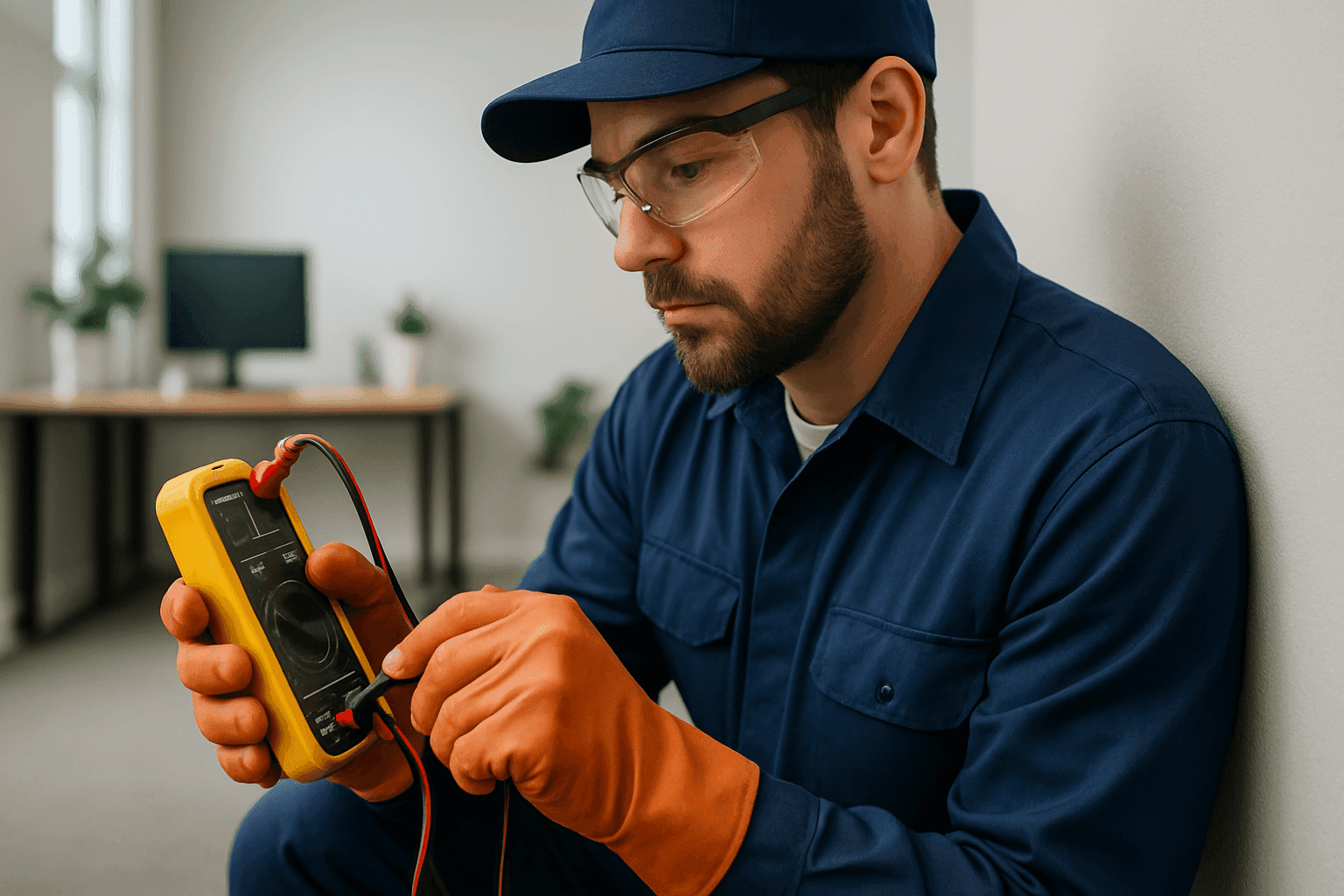
When the lights flicker or a breaker snaps off, stress can hit hard. Homes and businesses depend on electricity more than ever. Even a simple outlet failure can disrupt your day—or halt your workflow.
At Electric Saints, we understand that not every electrical problem is a five-alarm fire, but every one deserves respect. Safety first. Solutions next. Here’s how you can spot, troubleshoot, and handle the most common electrical faults—without risking your safety or your property.
Identifying the Issue ⚡
Electrical issues rarely announce themselves politely. Sometimes it’s a light that won’t stop flickering, or a breaker that trips every time you run the microwave. Other times, it’s a dead outlet, a buzzing switch, or that sharp, unpleasant smell of burning plastic.
Frequent electrical faults in homes and businesses include:
- Tripped circuit breakers: Sudden loss of power in part of your home or office.
- Flickering or dimming lights: Especially on stormy days or when large appliances kick on.
- Dead outlets or switches: No power, no click, nothing.
- Buzzing, sparking, or warm switches/outlets: Subtle signs of a serious problem.
- Burning odors or discoloration around outlets: Immediate action required.
These issues can have simple causes—like overloaded circuits or loose wires—or deeper roots, such as aging systems or faulty installations. According to the National Electrical Code (NEC), any sign of heat, burning, or arcing means stop and seek professional help. Fast.
Quick Safety Checklist
Before you even think about unscrewing a faceplate, run through this safety list:
- Is the area dry? Never touch electrical parts with wet hands or standing water.
- Are you wearing rubber-soled shoes? It’s a small step, but it can help insulate you from shock.
- Do you smell burning plastic, see scorch marks, or hear crackling? Stop. Turn off power at the main breaker.
- Is the device sparking or smoking? Unplug if safe; otherwise, cut power at the panel.
- Are children or pets nearby? Secure the space before troubleshooting.
If any answer is “yes” to the first three, do not proceed. Call an emergency electrician immediately.
Safe DIY Checks for Common Electrical Faults
Some issues are within your safe reach—if you’re careful and methodical. Think of it like checking a car’s oil, not rebuilding the engine.
Tripped Breakers
- Go to your electrical panel.
Look for breakers in the “off” or middle position. - Reset by flipping fully off, then on.
If it trips again immediately, there’s a problem downstream. Stop here. - Unplug devices on that circuit.
Plug them back in one by one, resetting each time, to see if a specific appliance is the culprit.
Dead Outlets
- Plug in a known-working device (like a lamp).
- Check other outlets nearby.
Sometimes, one GFCI outlet protects several others—look for a “reset” button. - Test with a simple outlet tester.
These inexpensive tools can reveal wiring faults or lost grounding.
Flickering Lights
- Tighten bulbs and check lamp wiring.
- If the issue affects multiple lights, it may be a loose connection in a junction box, or a voltage drop from an overloaded circuit.
- Turn off at the panel and call for help if the flickering is severe or accompanied by buzzing.
Buzzing or Hot Switches/Outlets
- Turn off power at the breaker.
- Do not touch or attempt repairs.
Heat and buzzing often mean loose wires or arcing—a fire risk.
Signs of Dangerous Faults
- Acrid, burning smells
- Outlets or switches hot to the touch
- Visible sparks or arcing
- Frequent breaker trips
Any of these should send you straight to the main panel to cut power, then straight to the phone for Fault Finding near you.
When to Call an Electrician
Knowing when to step back is as important as knowing when to try. If the issue persists after basic checks—or if you encounter any sign of heat, burning, or sparking—call a licensed emergency electrician.
Call Electric Saints if:
- Breakers trip repeatedly with no clear cause.
- Outlets or switches are warm, buzzing, or discolored.
- Power loss affects multiple rooms or large areas.
- You see or smell smoke—even briefly.
- Water leaks or floods reach outlets, panels, or wiring.
Remember, electrical systems are like the veins of your property. Don’t poke around in the dark.
What Pros Do On Arrival
When our team at Electric Saints arrives, we don’t just flip switches. We bring decades of experience, the right tools, and a sharp eye for safety.
Here’s what happens next:
- Visual inspection: Panels, outlets, wiring, and devices for signs of overload or damage.
- Testing: Using professional-grade multimeters, outlet testers, and insulation meters.
- Tracing faults: Carefully isolating circuits to locate the source of failure.
- Code compliance: Ensuring repairs meet NEC and local safety standards.
- Clear communication: Explaining findings and next steps in plain language.
We’ll never leave you in the dark about what’s wrong or what’s needed.
Prevention & Maintenance Tips
It’s easier to prevent fires than to fight them. Regular checks and a few simple habits go a long way.
- Don’t overload outlets.
Plug strips and extension cords are for temporary use. - Schedule annual electrical safety inspections.
Especially for older homes or busy commercial spaces. - Upgrade outdated wiring and panels.
Old knob-and-tube or aluminum wiring is a risk factor. - Install surge protection.
Especially for electronics and sensitive equipment. - Test smoke and carbon monoxide detectors monthly.
- Label your electrical panel clearly.
It saves time and could save lives in an emergency.
The NEC recommends periodic inspections and upgrades for both home and business settings.
Costs & Time Factors
Repair costs and timing depend on the fault’s complexity.
- Simple resets (like a tripped breaker): Minutes, often no parts needed.
- Outlet or switch replacement: Usually under an hour for a pro.
- Panel repairs, rewiring, or major troubleshooting: Several hours to a day, depending on access and age of system.
- Emergency service: Higher after hours, but peace of mind is priceless.
Always factor in the long-term value of safe, code-compliant repairs—especially for businesses where downtime means lost revenue.
When It’s an Emergency 🚨
Some electrical issues can’t wait—not even for daylight.
Call for emergency service if:
- You see or smell smoke, melting, or burning from electrical parts.
- Power loss threatens life safety (medical equipment, alarms, refrigeration).
- Water damage has reached outlets, panels, or wiring.
- You hear popping, sizzling, or see arcing (blue sparks).
If in doubt, always err on the side of caution. Your safety comes first.
Frequently Asked Questions
1. Why do my breakers keep tripping?
Usually, it’s an overloaded circuit or a short. Sometimes it’s a faulty appliance. If resetting doesn’t solve it, there’s likely an underlying fault that needs professional attention.
2. Is it safe to use outlet testers?
Yes, for basic checks. They’re like a thermometer for your electrical system—good for spotting simple issues, but not a substitute for a diagnosis if you find a problem.
3. How often should I get an electrical safety inspection?
The NEC recommends every 3–5 years for homes, annually for commercial spaces, and always after renovations or additions.
4. What’s the risk of ignoring a buzzing or hot outlet?
High. Heat, buzzing, or discoloration means arcing or poor connections—major fire hazards per both the NEC and the U.S. Fire Administration.
Local & Seasonal Considerations
Electrical demands shift with the seasons and your location. Summer means air conditioners and pool pumps; winter brings space heaters and holiday lights. Both can stress your wiring.
Tips:
- Before heavy seasonal use, check that circuits and panels can handle the load.
- After storms or floods, always inspect for water intrusion.
- For businesses, schedule maintenance during off-hours to avoid costly downtime.
Checklist: What to Gather Before You Call
Have this info ready to help your emergency electrician troubleshoot faster:
- The exact nature of the problem (flickering, power loss, etc.)
- Which rooms or devices are affected
- Any burning smells, smoke, or heat
- What you’ve already tried (breaker resets, unplugging devices)
- Age of your electrical panel or recent upgrades
- Signs of water leaks or recent storms
The more detail, the quicker and safer the fix.
Electric Saints is here 24/7 for emergency service, Fault Finding near you, and peace of mind. Your safety is our mission.
Call Electric Saints now — or reach us anytime at 877-748-7096 .